AI Wrote It!

I want to write when I feel I want to write. I want to express something when I feel there is something that makes sense. Something I want to register.
For a while, I was skeptical about how much I was using AI. If I use these tools extensively to write, am I in free fall? Does the writing stop being mine?
But in every piece I have written, I recognize myself. The words might be polished. The flow might be smoother. But what is underneath is me. My beliefs. What I think. What I carry.
Many times, AI gives me something that sounds good. Sometimes it sounds better than what I could write myself. But I don’t use it. It might sound right, but it doesn’t feel right. It might say more than I mean. Or it might make an argument sound complete when, inside me, it is not complete. So I change it. I remove it. I go back.
If I wrote only for myself, I would not care about grammar, language, or the words I use. I already carry what I want to express. Whatever I write down will trigger what I carry inside. A few words are enough. A sketch. They are reminders. Codes to recall a living experience.
But when I decide to write and publish to the unknown, it is different. I feel I have an obligation to transmit what I think and feel. I don’t want to force the reader to interpret my language. I want the reader to focus on the meaning. Maybe something will resonate. Maybe it will offer a perspective. Or maybe it will simply be a few words that return one day, when an experience makes them relevant.
I have often felt that we don’t really understand meaning through logic alone. We understand it when we encounter it. And then it becomes part of our living experience. Perhaps clarity allows the words to remain somewhere inside us until that encounter comes.
AI helps me give some structure to what I want to say. It polishes my words. It helps me express more clearly something that I already carry.
And now smooth text is becoming easy. Good grammar is easy. Good flow is easy. Words that sound profound can be generated in seconds.
Text is becoming a commodity.
But maybe we have given too much value to the smoothness of words. Is friction in language what makes writing original?
I don’t think so.
Style, rhythm, polished words. Are these what make us the author, or are they the means to project what we carry inside us?
Socrates argued with Gorgias about something not so different a long time ago. The skill of persuasion was not the same as knowing what is true. Maybe AI brings us back to the same question.
For me, what matters is whether there is something behind the words. Something I experienced. Something I thought about. Something that made me stop and feel: I want to register this.
AI might help me write it.
But before I sign it, I need to recognize myself in it.
Then another question comes.
When we read something and say, “AI wrote it”, we are already giving the authorship to the tool. But if the thought, the experience, the judgment, the choices, and even the rejection of its words came from us, who created the text?
And if we accept that the author is whoever produces the text, why wouldn’t the companies behind these tools one day claim the output as theirs?

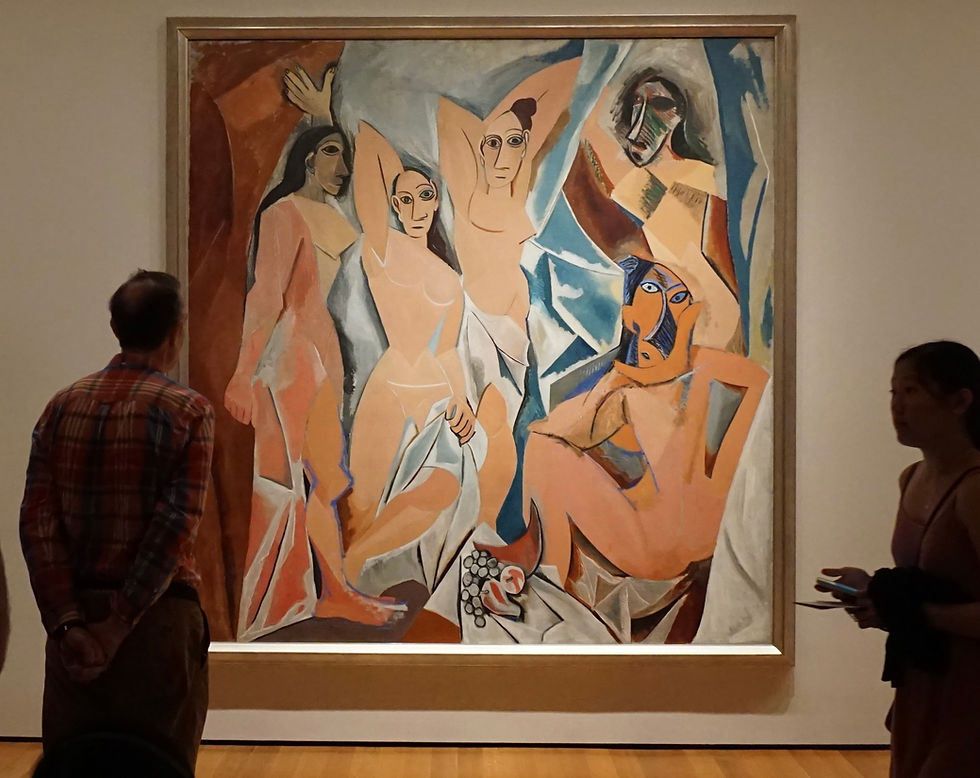
Marilyn Diptych (1962), Andy Warhol. Tate Modern, London. Photograph taken in February 2026.